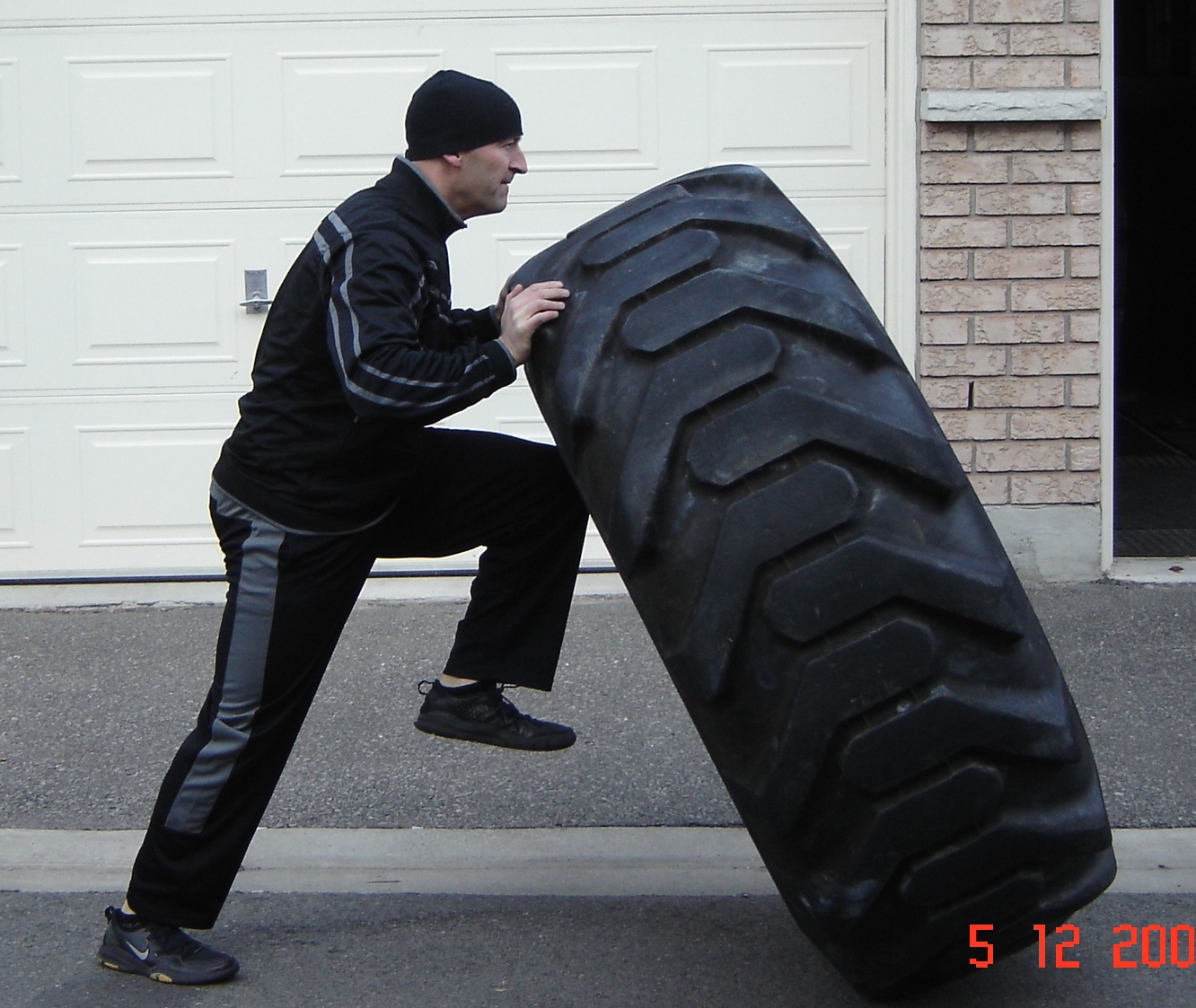
For those athletes who compete in contact or combat sports, physical conditioning is of the utmost importance. These “combatant athletes” subject themselves to immense physical stress in sports such as wrestling, football, judo, rugby, MMA, and others. To be able to withstand the rigors of their chosen sport and still perform at an elite level, these athletes (let’s call them warriors) must follow an intelligent training plan.
A well designed training plan does not have to be complicated. Unfortunately, many of these warriors mistakenly believe that the more complex and outlandish a training program seems, the better it must be. In an effort to incorporate "functional training" into their routines, warriors across the land are often found trembling on stability balls, balancing on wobble boards, lying on foam rollers, and jumping on Bosu balls. These tools have their uses, but they certainly won’t improve your strength and conditioning!
With the exception of a few core exercises, performing any exercise on an unstable surface is a waste of time unless the goal is rehabilitation. In fact, this type of training can also “de-train” these warriors, by providing inadequate muscle stimulation and entraining inappropriate motor patterns, all in the name of “sport specific” or “functional” training!
The key to becoming an unstoppable warrior is to get back to the basics. First, one must develop a solid strength base. Strength is the foundation for athleticism. Focus on basic primal movements such as squatting, lunging, deadlifting, twisting, as well as pushing and pulling from various angles. Use big, compound exercises, train heavy with solid form, and keep the workouts brief and intense.
Once a solid foundation has been established, it’s time to incorporate real-world “odd implement” training. This unorthodox style of training includes exercises such as tire flipping, sled dragging, sandbag carries, farmers walk, and stone lifting. A growing number of coaches, trainers, and athletes are recognizing the effectiveness of odd implement exercises or “real-world training”, because it gets results.
Also considering that many of these unique movements are explosive in nature, there tends to be greater carry-over to contact / combat sport activities than there is with traditional strength training in the gym. Because each compound exercise involves several muscle groups working together, training with these unconventional implements leads to full body “functional” strength, which transfers to better preparation for athletic performance on the battle-field.
This is why we use this method of training at our Top Form Strength Camp. The TF Strength Camp delivers an old-school workout with simple, primal movements using basic compound exercises and “real-world” implements. It has been our experience that this training style will develop full body strength and power while improving body composition and athletic performance.
Odd implement training is a rejection of the “mirrors, chrome, and elevator music” environment of most traditional gyms in favor of basic, ground based, athletic movements. Training with implements is a rugged, uncomfortable, yet enjoyable endeavor that builds not only physical strength but also strength of character. In the end, this is what separates the warriors from the “wanna-be’s”
Today I just wanted to write a short review / summary of a course I attended last weekend called "Sports Specific Training and Periodization Training for Sports". I know, it's a mouthful. Periodization is the manipulation of training techniques over yearly plans. To some of you this content may seem a little dry, but I thought it was worth posting because you may find some of the information useful or interesting.
Overall I was pleased with the course, although there were areas that could have been improved with the presentation (ie- audio/visual).
Much of the information presented was simply review for me, which was encouraging to receive confirmation of some of my training philosophies. I did learn a couple of new things as well, and I may adjust my long term training schedules based on ideas presented. However, I didn't necessarily agree with everything that was being taught. I won't get into the details of how we looked at periodizing a training program over a yearly plan, but I'd like to summarize some of the key points that stood out for me:
The text for this course was Periodization Training for Sports by Tudor Bompa and Mike Carrera. Bompa endorses a linear model of periodization which has become popular with Western athletes and coaches, whereas for my own needs and the goals of most of my clients I have found a conjugated (or "concurrent") model of periodization more effective in the long term... especially when there are several competitions during the year, or a trainee wishes to maintain optimal strength and power all year round. Although there was alot of great ideas discussed regarding microcycles and macrocycles, I would still choose to apply these to conjugated periodization.
One great point that was brought up was that when training to increase power for sports, one should not simply try to mimic the sport activity in training. For example, training for power using weighted implements (such as baseball bats, tennis rackets, or golf clubs that are heavier than normal) will actually make the athlete SLOWER rather than more explosive! In part this is because it teaches the athlete to focus on decelerating the heavy implement to control it at the end range rather than moving it faster. It may also disturb the normal movement pattern that is developed. The main goal in training for power is to increase the ability to contract muscles faster, not to simply mimic the sport movements.
We got into Energy System Training as well, which I enjoyed. The use of ATP during Alactic, Lactic, and Aerobic energy system training. The focus was on training for power rather than endurance or hypertrophy in this course. We looked at how to incorporate Max Effort training (heavy load, low reps, more rest) to recruit more fast twitch muscle fibers and maximize force generation, then how to use Dynamic Effort training (lighter loads, faster reps) to active additional fibers and increase the rate at which muscle fibers were "discharged" (ie- recruit more fast twitch fibers and fire them off faster).
20 minutes of light cardio post workout can help to flush out lactic acid build-up and speed up recovery.
Central Nervous System (CNS) Training: CNS training is the synchronization of movements through repetitive training / learning of those movements. The purpose of CNS training is to reduce the inhibition on muscle contraction (reduce the influence of the Golgi Tendon Apparatus) so that greater force can be generated. Long term training results in a more efficient CNS with less GTO inhibition and more powerful contractions. However, fatigue should be avoided in training for this goal. For example, training for max strength involves fewer reps and more rest between sets, as opposed to training for hypertrophy (growth) which requires a fatigued state to be reached using more reps and less rest.
Training Economy: Stick with compound, multi-joint exercises targeting majority of muscles involved in the sport to make most efficient use of time. Small isolation exercises and accessory movements should only be considered if time allows.
Multi-lateral training for youth: Studies have shown that youth who engaged in specialized training for sport early on played best at 15 years old, but those who focused on building their foundation early on (ie: multi-lateral development including physical activities for fun, bodyweight exercises, etc) became better athletes later on. This should encourage parents and coaches not to push their children into high-performance training too early in life. Let them develop their athletic foundation first, then consider specialization training for 15 to 18 year olds.
Super-Compensation: I learned something new on this topic. As most athletes and trainers should know, it is favorable to aim for a training program to "peak" just before a competition, so that the athlete has reached a state of fatigue (close to over-training). Then they can rest and recuperate for several days before the event, allowing their body to "super-compensate", causing an increase in performance. What was new to me was that they suggested still including some form of light training right up to a couple of days before competition to prevent "involution" (basically "decompensation"). This can simply be light aerobic activity or technical training (ie: movement rehearsal) with very light loads. According to the resources presented, active recovery was superior to complete rest in most cases, even pre-competition.
Stability Training: I was pleased to hear that the current research out there also indicates that training on BOSU balls, stability boards, stability balls, and those little "whoopie cushion" things will reduce athletic performance, increase risk of injury, and decrease the amount of force and power you can develop in training. Thank you! I've been arguing this point with trainers for too long. These stability training implements certainly have a place in the rehab setting, but they've become a fitness industry fad and are being used WAY out of context!
Flexibility Training: I was also encouraged by the fact that this course explained how static stretching before and during training can reduce performance and increase risk of injury. I have been saying this for years. Again, another point of contention for many trainers, who still insist on stretching their clients out before a workout, despite the current research. Active stretches such as a dynamic warmup should be performed pre-workout, then passive / static stretches can be performed after IF NEEDED.
Yoga is not a complete workout, and may even hurt you! Yep... that's what I've been tryin' to tell people, but I feel like one man against a Yogic Cult.
Core Training: after the initial adaptation stage of training, minimal isolation work is needed for core strength, as long as you are doing big, compound exercises that involve core.
Deep Squats: OK, I do not agree with the the argument they presented on this topic. The instructor explained why they believed that one should not squat below 90 degrees of knee flexion. I disagree, and I can present resources to support the fact that deep back squats performed with good technique are healthy for your knees and provide favorable training results. Provided a safe progression is used over time, and the trainee has no knee or lower back injuries, deep squats are a terrific exercise! To be fair, the instructor did acknowledge that he does use deep squats for some athletes, depending on sport requirements.
Overspeed Training: we looked at how overspeed training and resisted speed training differ, and how some studies show that this type of training (using straps, bands, parachutes, or sleds) may interfere with an athletes contact time with the ground and negatively affect their running technique. Sled dragging still has great applications in training, however.
Well, those are some of the topics that I found interesting in this course. As I mentioned, most of the information presented was not new to me, but it's also important to review as well as to learn something new. Overall, I would consider pursuing further education on the subject of periodization and training for sport.
I hope you found something of interest in this post. If you have any questions or comments, please post them below... I always like to hear from my readers!
I have an interesting article on growth hormones to post next time... watch for that one!
Fully Dynamic Warmup and Core Activation -- Hex Deadlifts- 4X5 reps with 440 lbs -- Front Squats- 185X10 3 SuperSets with: GluteHam Developer: 10 reps with mini band resistance -- Power Wheel Rollouts 2 Supersets with: Power Wheel Pikes
Here is a short video with several of my friends, colleagues, team mates, and clients training for competition or just to stay in shape.
Regardless of whether I am training male or female clients, I approach their strength training program with a similar intensity. Of course there will be small variations in each individuals workout, but to get results both men and women need to participate in a serious strength training program as part of their overall exercise plan.
Unfortunately, there is still a stigma attached to serious strength training for women. Many women mistakenly believe that resistance training will create large, unattractive muscles. Some women think they have to lose their body fat before starting to weight train, or the fat will “turn into muscle”. The truth is that the vast majority of women do not have the genetics to build large muscles. It is also impossible to turn fat into muscle, or muscle into fat, as each cell is completely different from one another.
Strength training has been proven to benefit all populations, both male and female, from young athletes to older adults. In fact, intense resistance training provides tremendous benefits to women, in particular. Traditionally, women depended on a low calorie diet and cardiovascular activity to “get in shape”. Unfortunately, low calorie diets simply depress your metabolism and, without including resistance training, make it nearly impossible to attain long term results. It has now been demonstrated that strength training is essential if you want to get leaner and reshape your body. But the benefits of strength training go far beyond physical appearance:
1) Increased Metabolic Rate – This is a very important benefit of strength training for women. A good strength training program will increase your resting metabolism by increasing the calories you burn every day! This helps you reduce body fat much more quickly! This becomes especially significant for middle age women, because strength training can help them avoid the typical metabolic ‘slump’ that often occurs at that stage in life. Therefore, the secret to staying lean as we age is not to eat less, but to do more strength training!
2) Increasing Bone Density - Strength training prevents and combats osteoporosis by maintaining or increasing bone density. This reduces risk of fractures and other health issues. Once again, this becomes even more important as we age.
3) Lean Muscle Gain - Note: You will NOT get big and bulky by strength training! Women do not produce enough testosterone to develop excessively large muscles. You would need to train with very heavy weights, eat significantly more, and dedicate yourself for years to becoming a bodybuilder in order to “bulk up”, and even then most women would not become overly muscular. Simply lifting weights as part of a regular strength training program will make you leaner, stronger, and more “shapely” or toned. Keep in mind, for every pound of lean muscle you have you will burn about 50 calories each day! This is a good reason to maintain or gain that lean tissue!
4) Injury Prevention - Strength training strengthens our muscles and tendons, as well as bones, as already mentioned. Once again, this is important as we get older. Strength training for women and men is highly recommended for injury prevention.
5) Better Balance - Stronger legs and core muscles, as well as greater neural muscular control, means an increase in overall balance and coordination.
6) Decrease Risk of Coronary Disease - Strength training can reduce your blood pressure and cholesterol levels. Heart disease is one of the highest causes of death for women each year.
7) Rehabilitation and Recovery – Building stronger muscles and more stable joints is one of the best ways to recover from an injury. By ensuring the muscles surrounding a joint are trained in a balanced manner, and strong on both sides, you speed the rehabilitation process.
8) Enhanced Performance in Physical Activity – This results in a better quality of life. Regular daily activities are performed with less effort.
9) Aging Gracefully – Strength training can help you maintain stable hormone levels, prevent “sagging” bodyparts, keep a more youthful figure, and improve your posture.
10) Look and Feel Better – Strength training can improve your self image by keeping your body looking younger, healthier and leaner. Strength training will reduce body fat, increase muscle tone, regulate blood sugar levels, and help you build strength and confidence. The physical results alone are a great reason to start strength training, but the mental benefits are awesome as well.
Quite often women will avoid using heavy weights while strength training because they are afraid of “bulking up”. Unfortunately, if not enough resistance is used the muscle will not be challenged enough to become more "toned" or "shaped". Consistent hard work is necessary to become more toned and to reshape your physique! You need to lift weights that are heavy enough to cause muscle fatigue.
To achieve safe results quickly, you should follow an effective program designed by a certified fitness professional. As always, consult with your physician before beginning any new exercise routine. I hope this article has inspired you to take your strength training program seriously and I wish you the best in reaching your fitness and performance goals!